
One Website, Multiple Languages To Increase Global Reach: Multilingual SEO Guide 2026
- May 6, 2026
-
Ombir Sharma
- SEO

The main purpose of search engine optimization processes is to scale your website in every possible way. The more demographics you cover, the larger your market size. But as you know, language is the biggest barrier when it comes to business expansion or dealing across the globe. Therefore, multilingual SEO is here to help you.
Keep reading to understand how it works, why it is important, and what the steps are to execute it.
What is Multilingual SEO?
Multilingual SEO is a process of locally optimizing your website in more than one language. The approach and main focus of this process is language-led, which means you prioritize language over locality while targeting your market.
Why is Multilingual SEO important in SEO?
Though it is a challenging task to invest in multilingual SEO, it offers several benefits. First, it enables exposure to a broader audience; second, and most importantly, it develops trust with increasing engagement and communication.
A survey was conducted of 8,709 consumers in 29 countries, out of which 76% preferred purchasing products with information in their own language. The stats also revealed that 40% will never buy from websites in other languages.
Steps for an Effective Multilingual SEO Execution
To implement this SEO system, there needs to be a strategic, step-by-step approach. Here it is:
Decide Your Target Audience
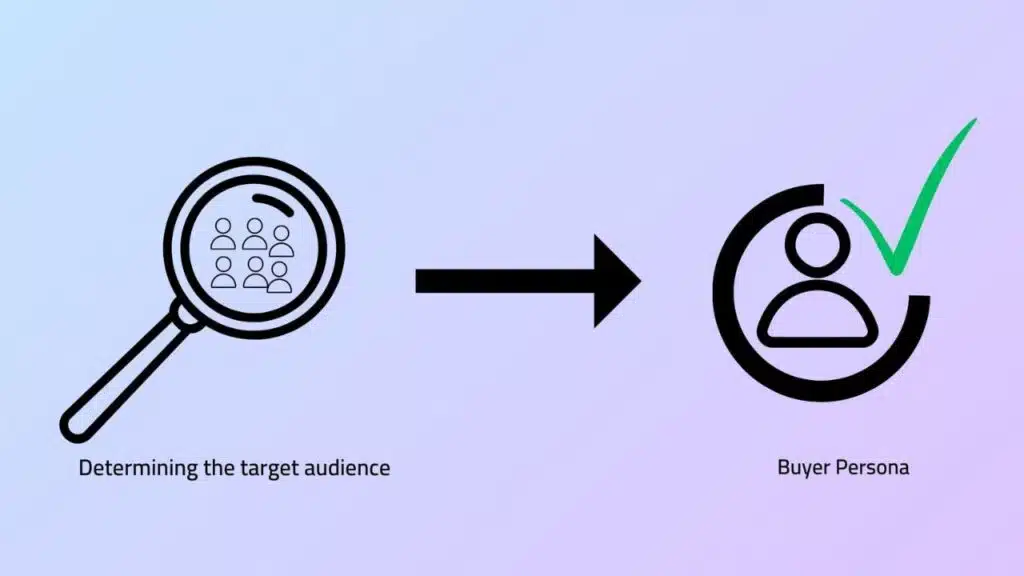
- When you start something, the first thing you must understand is what you want. Therefore, decide on the market, i.e., region or language, you want to target. Consider factors like demand, competition, cultural angles, and customer needs.
- Learn about your targeted audience’s shopping styles, buying behavior, and habits. For instance, different countries have different levels of internet penetration and smartphone users. So factors like median age of potential customers, level of education, etc., can highly impact how people may interact with the website and what their expectations will be.
- Keep a strong watch on your competitors, what they are doing in the market, their strategies, keyword use, backlinks, and more. Do not copy and paste the ideas, but see what more and better you can do than them.
Keyword Research

- After choosing the market, comprehensively perform keyword research for each language to understand buyer behavior. Find the most ranking keywords, but keep them economical to rank. Tools like Google Ads Keyword Planner and Google Trends can be helpful.
- Collaborate with local SEO experts for keyword research; a human localizer’s judgment really matters, as it will also help you understand the intent behind any query.
- Work on local search engines because a country or region may not necessarily have just one specific search engine.
- Optimize app store search if you have a mobile app for people to find your app in their searches.
Choose Your URL Structure
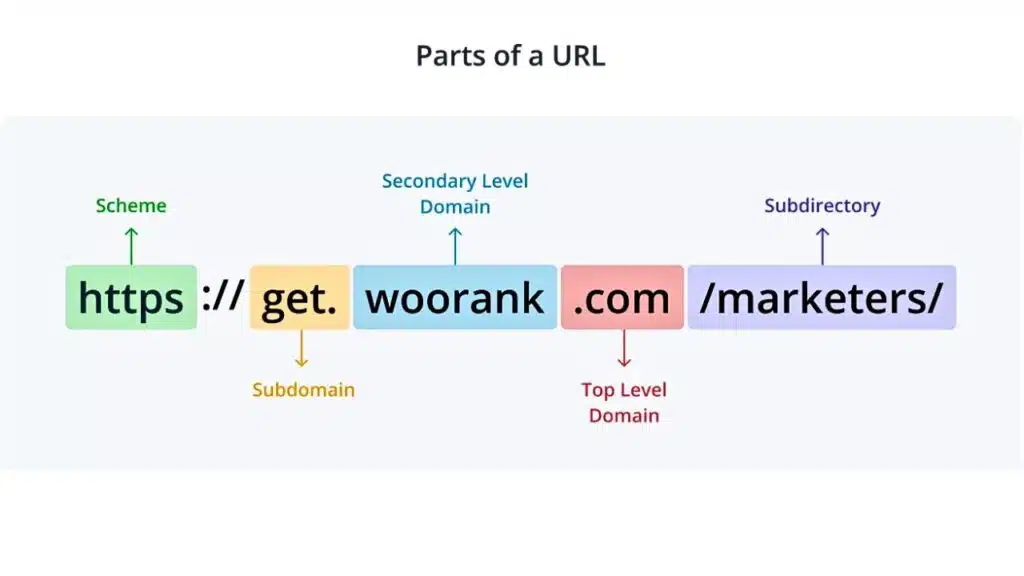
You need a dedicated URL for each language and country version to help Google index your site properly to present it to users searching for a specific language. There are different types of domains to choose from.
Separate Domains
These require a massive and complex IT infrastructure, and it is time-consuming as you build links to each domain separately. Users are often familiar with the top-level domain of their country.
| Type | Separate Domains | Subfolder | Subdomain |
|---|---|---|---|
| Definition | It is a dedicated domain for each country or language. | These are simply different folders within a single domain to categorize different languages. | This is a use of each separate section of a domain to work on it like an independent site |
| Pros | Gives the ability for localized hosting to curb page load time. | Easy to roll out subfolders and pages on a completely different hosting setup. | Subdomains also offer you the ability to localize hosting for improving page speed. |
| Cons | Very complex to set up and maintain, and requires massive IT infrastructure. | You can’t use localized hosting. | Set up and maintenance are technically challenging. It is required to build SEO authority for multiple domains. |
| Example | www.salesforce.es www.salesforce.frwww.salesforce.in | www.salesforce.com/es/www.salesforce.com/fr/www.salesforce.com/in/ | es.salesforce.comfr.salesforce.comin.salesforce.com |
Another option is URL Parameters, though Google does not recommend using it while performing language SEO. Avoid this option as URLs with parameters confuse search engines, and they may struggle to serve the correct language versions to users.
Example:
- www.salesforce.com?loc=es
- www.salesforce.com?loc=fre
- www.salesforce.com?loc=in
Localize Content (Optimization & Translation of Webpages)

After dealing with technicalities such as URL setup, it comes to making your website relatable and appealing to the target audience.
- Do not simply rely on translation tools, because having a human touch to your translations is the key, as it will give you an idea about what exactly people look for and more of the cultural and behavioral nuances.
- Your title tags, meta descriptions, URL slugs, and internal links all need to be optimized as per local SEO needs. Keep them brief, make use of multilingual keywords, use active voice, and avoid clickbait. In localizing URLs, keep some rules in mind, such as using lowercase text, safe characters, avoiding dates, and separating words by using hyphens.
Incorporate Hreflangs
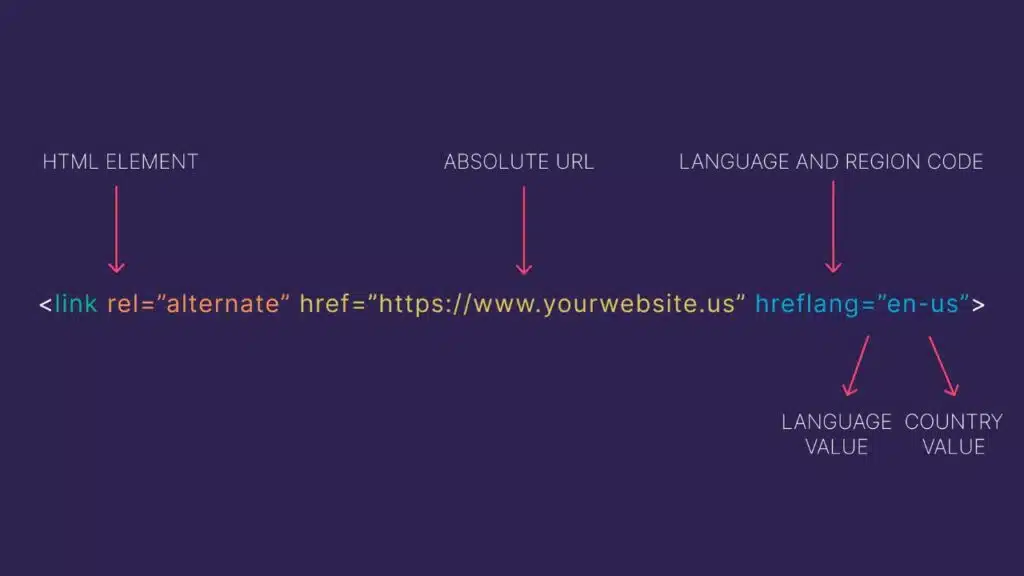
- Hreflangs are called HTML attributes, which guide search engines about the language and regions to display the correct version of webpages in respective countries.
- It has three different methods, including HTML, sitemap, and HTTP, and the choice depends on your website type. A site with several webpages is easier to manage an XML sitemap for hreflangs, though if needed, it is easier to manage and edit in HTML code for small to medium websites. And HTTP headers are used in case of non-HTML pages like PDFs.
- It requires a lot of detailing while dealing with hreflangs, hence you should consider an SEO expert to carry out the process.
Backlinking
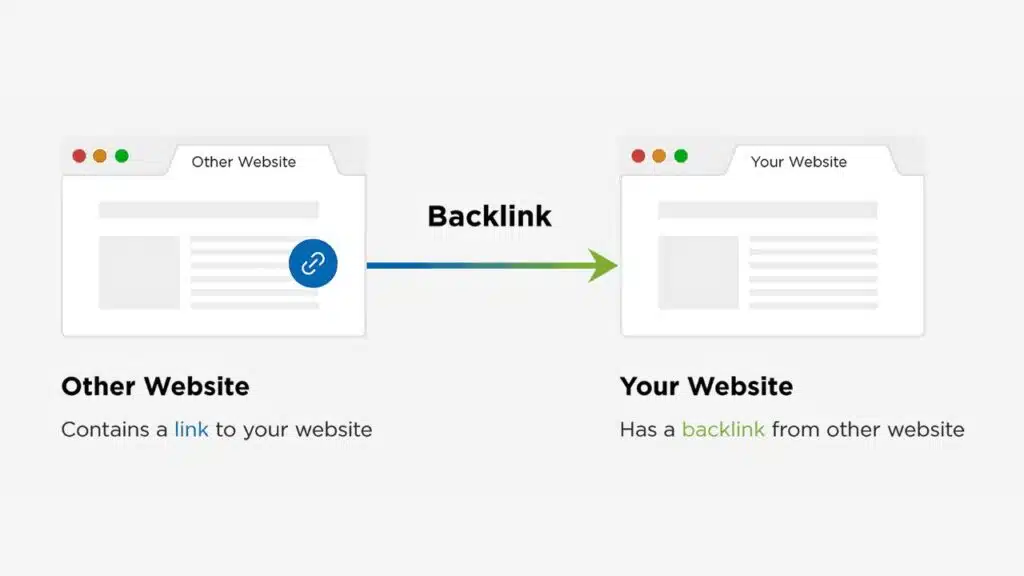
- Backlinking in search engine processes is a golden bridge and is a signal of strong authority and trust for search engines. But it is important to focus on getting high-quality and relevant backlinks.
- For example, if you are dealing with the Japanese or Chinese market, collaborate with popular local influencers, bloggers, content creators, or domain-specific enthusiasts to gain trust, relevance, and recognition in the market. As these collaborators will link back to your website, boosting your rankings in local SERPs.
- Some of the tips you can use are creating content such as blogs, infographics, tools such as checklists, etc, getting involved in forums and community Q&As, and making partnerships with niche websites or industries.
- This process is not just technical but requires creativity, hard work, and dedication.
What are The Challenges in Multilingual Search Engine Marketing
Till now, we understood that implementation of this process is multistepped and requires several complicated skills at each level; there are certain challenges, and here we look at those and how to overcome them.
Challenges
- We learnt about Hreflangs usage, but sometimes incorrect implementation due to the use of the wrong language/region code can cause search engines to ignore Hreflangs completely.
- Confusion for search engines in similar or identical content, specially incase of the same language but different regions, such as between the UK, the US, and India in English.
- Poor quality or direct translation can miss out on cultural nuances, tone, and user intent, leading to a failure in the use of localization SEO.
- Improper URL structure and bad keyword mapping can confuse both users and search engines, and also target the wrong queries.
- There needs to be proper signals, as confusion in geo-targeting can mismatch country versions in search results.
- Scalability is also one of the major challenges in using multilingual seo because managing multiple languages, webpages, updates, and seo technicalities can increase the chance of errors.
Solutions
- Use correct language and region codes, make sure to have bidirectional linking, do a regular audit to spot errors, and use sitemaps for bigger sites.
- Make use of self-referencing canonical tags and not cross-language canonicals to avoid confusion and localize content where possible.
- Avoid direct or just app translations, take the help of native translators and localization experts. Embrace local phrases, idioms, currency, and messaging to each audience.
- Choose local keywords and one structure in URLs across all languages, and keep each language version separate.
- Mix hreflang tags with regional target and language versions to save the website from content duplication and improve the visibility of each localized page.
- Take advantage of centralized systems such as CMS in dealing with multi-language support; also, you can automate hreflang using sitemaps and maintain a clear workflow.
In a Nutshell
Multilingual SEO is a complex yet creative, technical, and dedicated process if you are focusing on global expansion. It helps in increasing your market size and creates new opportunities on a global scale. People don’t buy what they need but buy with what they actually resonate with, and language and communication are key tools for building trust, reliability, and recognition among a foreign audience. We discussed each step in detail to execute this process and how to deal with challenges throughout the process. So if you wish to grow your business beyond your native demographics, you need a strong multilingual seo strategy.
Related: What Is Voice Search Optimization: Let A Voice Command Rank Your Website
FAQs
What is the difference between multilingual SEO and International SEO?
Suppose you want to have one version of the English language and one version of Spanish globally; this is known as multilingual SEO. That is, this type of SEO practice is about including more than one language.
Whereas, if you wish to have multiple versions of your websites but the language is the same, this defines international SEO. Like two different versions of your websites, one for the U.K. and one for the U.S. Here, more than one language is not needed.
Ombir Sharma is the Managing Partner at Contento Technologies, leveraging extensive experience in digital marketing to drive business growth. He also leads LinksFrog, a company specializing in high-quality SaaS backlinks and strategic link-building to enhance website rankings and organic traffic. With a strong foundation in SEO, content strategy, keyword research, and analytics, Ombir excels at crafting engaging, optimized content and implementing innovative SEO strategies that deliver measurable results. His passion for staying ahead of industry trends allows him to blend creativity with data-driven strategies, creating impactful online experiences that fuel success.
About us and this blog
We are a digital marketing company with a focus on helping our customers achieve great results across several key areas.
Request a free quote
We offer professional SEO services that help websites increase their organic search score drastically in order to compete for the highest rankings even when it comes to highly competitive keywords.
Subscribe to our newsletter!
More from our blog
See all posts