

What Is Voice Search Optimization: Let A Voice Command Rank Your Website
- May 5, 2026
-
 Editorial Team
- Technology

The global voice search market was estimated at $3.05 billion in 2023 and is expected to grow at a rate of 23.8% from 2024 to 2030. Also in 2023, the generic search segment shared the largest revenue of 53.6%. Voice Search Optimization is one of the optimal ways to increase your website ranking and stay visible in the online market.
In this, I will familiarize you with the definition of voice search and its optimization, and how it works. We will also look at why it is important and some of the real-world examples.
What is Voice Search?
It is one way of searching or surfing online, the way we normally search by writing our queries in the search bar of any search engine. In voice search, instead of typing a query, you simply speak or voice command the search engine to get answers. You will generally see the mic icon at the top right corner of the search bar, just press it or hold it and ask what you need.
Some of the widely used voice assistants like Siri, Google Assistant, and Amazon’s Alexa use voice search technology. You can operate them on phones, laptops, smart speakers, and other devices.
What is Voice Search Optimization?
Just like every other seo process, the key aspect of voice search seo is to fine-tune your website content to make it voice search-friendly. So that it becomes easier for voice assistants to find, understand, and display your website in voice search results.
It's just another search method, right? Then what is the difference?
The catch is, when people use voice search its more like how they speak in daily lives - a more informal, casual tone or longer conversational style.
While optimizing, ensure your sites work efficiently across devices and platforms, as most voice searches happen on smartphones, smart TVs, and smart speakers.
How does it work? (Technical Base of VSO)
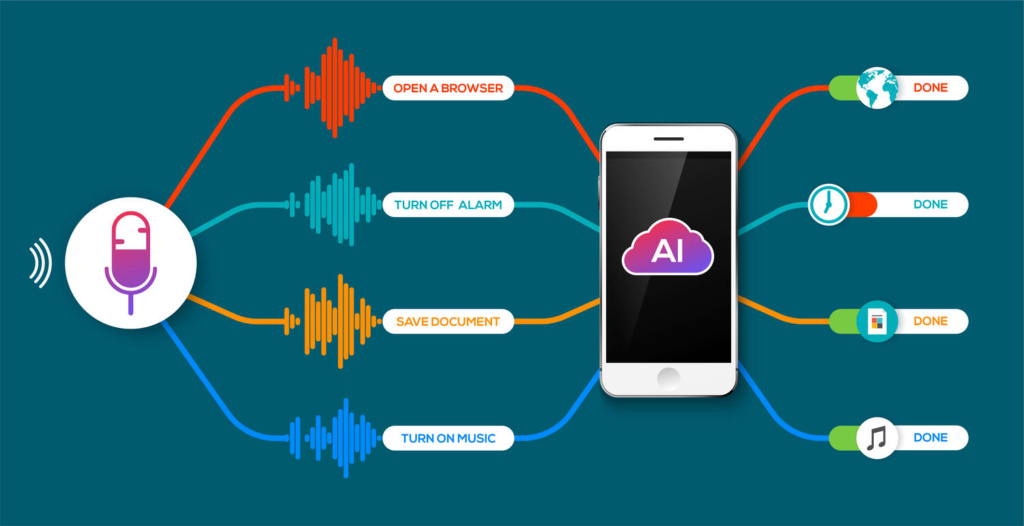
The voice search systems use speech-to-text conversion, applying Automatic Speech Recognition (ASR), which converts audio into text. Later, VSO uses the mechanism of Natural Language Processing (NLP) & Natural Language Understanding (NLU) to process text and the context, the action needed to be done, and entities are comprehended.
After this, the machine learning models and semantic search algorithms rewrite the queries in the language used in the web content or search engine. For instance, a great coffee spot near me turns into a top-rated cafe. And then the processed query is sent to search engines, and it ranks your website in the SERPs by taking voice search factors into account.
The voice search engine typically gives a single specific answer rather than a list of options, pulling it from websites with high DA, information graphs, and featured snippets.
And finally, the answer is given or is voiced (read-aloud) using text-to-speech, and that’s how the assistant speaks the result back to the user.
How to Optimise a Website for Voice Search
Finetune Language & Keywords
Voice searches are more casual and conversational, rather than typical short keywords. Therefore, consider how people talk normally and incorporate long phrases. Like ‘where to find a nearest water booth?’ is more common than just ‘nearest water booth.’
Hence, focus greatly on keyword research and use appropriate long-tail keywords, question keywords, and conversational keywords.
Analyze Search Results

When targeting keywords, look at what is happening in the existing search results for that keyword. Understand the type of content served by the search engine when users use the particular query. Be updated about the SERP features, as these additional elements, such as People also ask, Featured snippets, Local pack, and Rich snippets, are on SERP. All this can add something new beyond the standard blue links.
Implement Schema Markup
Schema Markup is one of the most crucial steps in SEO processes, it is a special code by which engines understand your content better. It guides engines to grab important details like events, reviews, and contact information. It can also help in increasing the chances of appearing in rich snippets.
Testing Methods
Google offers a tool called Natural Language API, which helps you understand how Google understands your content. It offers suggestions for improvements to make your website and content more voice search-friendly.
Leverage Featured Snippets
Featured snippets are often the source of answers for voice search queries, as they appear at the top of search results. Hence, it is important to format your content in alignment with this. You can break content into small and clear chunks, such as bullet points, lists, and short paragraphs. This format gives better chances of being featured in voice search engine results.
Work on Local SEO
Voice assistance often follows local directories such as GBP, Yelp, and Bing Places to offer responses for local queries. This is why it is important to maintain a robust local SEO strategy.
Optimize your Google Business Profile by making sure it is up to date with NAP (business name, address, and phone number). And another element is acquiring positive reviews. All these small detailing helps local businesses appear in the search results.
Also, focus on directories other than Google, unlike Google Assistant, Amazon’s Alexa, Microsoft Cortana, and Apple Siri fetches data from other sources as well. If you want your business to rank in search results, it must be shared by voice assistants.
Also, target local keywords by considering traditional and cultural nuances relevant to the region and locality.
Mobile-friendliness
Generally, voice searches are done on mobile phones, consequently bringing the crucial need for a mobile-friendly website. Use a responsive web design that can adapt to various screen sizes. Also, check if the buttons and links are easily tappable and avoid pop-ups that can hinder navigation.
Monitoring
Continuous monitoring of the performance of your VSO efforts is required to keep track of search engine rankings and SERP features. It helps to identify gaps, spot efficient working processes, and opportunities for optimization.
What is the Need for Voice Search Optimization?
The voice commerce market was sized at $150.34 billion in 2025 and is projected for a growth of $484.09 billion in 2030 with a CAGR of 25.7%. Since brands optimizing voice search can surely experience enhanced reach and customer engagement.
Today, there is a high reliance on smartphones for almost everything, and customers prefer voice search for its speed and convenience over text-based searches.
Voice searches dominate the local searches and often are action-driven. Another data suggests 35% of U.S. adults possess at least one smart speaker, showing the increased use of smart assistants in domestic settings as well.
Another advantage of improvisation for voice searches is that it improves technical SEO elements along the way, which in turn offers a better user experience.
Conclusion
Voice search has become an integral part of the online world, and everything runs on the internet these days, which clarifies the permanence of voice search. As we saw, the number of people using smart devices is increasing day by day, which is another reason businesses need to invest in voice search optimization. The key to ranking in this search format is simple language, SEO localization, schema markup, etc., as we already discussed in detail. Though technology keeps upgrading, we must be aware of new ways to improve and stay ahead in this cutting-edge field.
Related: How To Succeed In Influencer Marketing: 2026 Influencer Guide
About us and this blog
We are a digital marketing company with a focus on helping our customers achieve great results across several key areas.
Request a free quote
We offer professional SEO services that help websites increase their organic search score drastically in order to compete for the highest rankings even when it comes to highly competitive keywords.
Subscribe to our newsletter!
More from our blog
See all posts